VMware Tools provides many of the needed drivers for a guest OS. The new VMware SVGA 3D driver is installed and functioning properly.
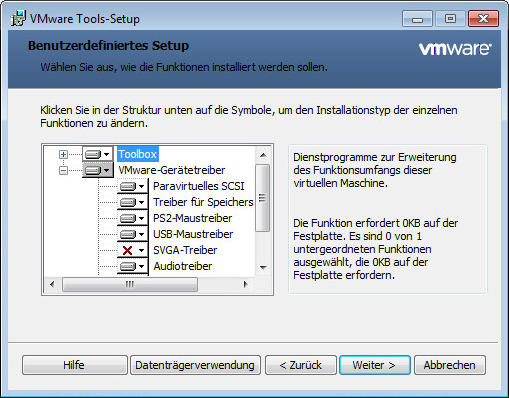
Device drivers smooth mouse operations, make VMware features such as folder sharing available, and improve sound, graphics, and networking performance. If you do a custom VMware Tools installation or reinstallation, you can choose which drivers to install.
Which drivers are installed when you install VMware Tools also depends on the guest operating system and the VMware product. The following device drivers can be included with VMware Tools:
SVGA driver Download oda kazumasa jiko rare. 1. Click download file button or Copy kazumasa oda URL which shown in textarea when you clicked file title, and paste it into your browsers address bar. If file is multipart don't forget to check all parts before downloading!. | This virtual driver enables 32-bit displays, high display resolution, and significantly faster graphics performance. When you install VMware Tools, a virtual SVGA driver replaces the default VGA driver, which allows for only 640 X 480 resolution and 16-color graphics. On Windows guest operating systems whose operating system is Windows Vista or later, the VMware SVGA 3D (Microsoft - WDDM) driver is installed. This driver provides the same base functionality as the SVGA driver, and it adds Windows Aero support. |
SCSI driver | When you create a virtual machine, if you specify that you want the virtual machine to use a BusLogic adapter, the guest operating system uses the SCSI driver that VMware Tools provides. Some recent guest operating systems, however, contain LSI Logic Parallel or LSI Logic SAS drivers. For example, Windows Server 2008 defaults to LSI Logic SAS, which provides the best performance for that operating system. In this case, the LSI Logic SAS driver provided by the operating system is used. |
Paravirtual SCSI driver | This driver is for PVSCSI adapters, which enhance the performance of some virtualized applications. |
VMXNet NIC drivers | The vmxnet and vmxnet3 networking drivers improve network performance. Which driver is used depends on how you configure device settings for the virtual machine. Search the VMware Knowledge Base for information on which guest operating systems support these drivers. When you install VMware Tools, a VMXNet NIC driver replaces the default vlance driver. |
Mouse driver | The virtual mouse driver improves mouse performance. This driver is required if you use some third-party tools such as Microsoft Terminal Services. |
Audio driver | This sound driver is required for all 64-bit Windows guest operating systems and 32-bit Windows Server 2003, Windows Server 2008, and Windows Vista guest operating systems if you use the virtual machine with VMware Server, Workstation, or Fusion. |
Kernel module for sharing folders | The host-guest file system module, called hgfs.sys on Windows guest operating systems and vmhgfs on Linux and Solaris, is required to use the virtual machine with Workstation or Fusion and share folders between hosts and guests. |
ThinPrint driver | This driver enables the virtual printing feature on Microsoft Windows virtual machines. With virtual printing, printers added to the operating system on the client or host appear in the list of available printers in the guest operating system. No additional printer drivers must be installed in the virtual machine. |
Memory control driver | This driver is available and recommended if you use VMware vSphere. Excluding this driver hinders the memory management capabilities of the virtual machine in a vSphere deployment. |
Modules and drivers that support making automatic backups | If the guest operating system is Windows Vista, Windows Server 2003, or other newer Windows operating systems, a Volume Shadow Copy Services (VSS) module is installed. For other, older Windows operating systems, the Filesystem Sync driver is installed. These modules enable backup applications to create application-consistent snapshots. During the snapshotting process, certain processes are paused and virtual machine disks are quiesced. |
VMCI and VMCI Sockets drivers | The Virtual Machine Communication Interface driver allows fast and efficient communication between virtual machines. Developers can write client-server applications to the VMCI Sock (vsock) interface to make use of the VMCI virtual device. |
You can specify monitor resolution settings, configure multiple monitors, and select accelerated graphics capabilities for a virtual machine. You can use the multiple-monitor feature when the virtual machine is in full screen mode.
For Windows guests, to use DirectX 9 accelerated graphics, the guest operating system must be Windows XP or later. To use DirectX 10 accelerated graphics, the guest operating system must be Windows Vista or later. To use DirectX 10.1 accelerated graphics, the guest operating system must be Windows 7 or later.
- Verify that the latest version of VMware Tools is installed in the guest operating system.
- Verify that the guest operating system in the virtual machine is Windows XP or later, or Linux.
- If you plan to use DirectX 9, DirectX 10, or DirectX 10.1 accelerated graphics, prepare the host system. See Prepare the Host System to Use 3D Accelerated Graphics.
- If the guest operating system is Windows 7 or later and you want Workstation Player to automatically adjust the virtual machine user interface size, update VMware Tools in the guest to the newest version.
- If you are using Windows 8.1 (Update 2) or Windows 10, Workstation Player detects the DPI on each monitor and scales the virtual machine to match the DPI on the host.
Procedure
- Select the virtual machine and select Player > Manage > Virtual Machine Settings.
- On the Hardware tab, select Display.
- (Optional) To run applications that use DirectX 9, DirectX 10, or DirectX 10.1 accelerated graphics, select Accelerate 3D graphics.
- Specify whether host settings determine the number of monitors.
Option
Description Use host setting for monitors When you select this setting, the SVGA driver uses a maximum bounding box width of 7680 and a maximum bounding box height of 4320. Temple run 2 mod apk 2020. The virtual machine uses the number of monitors on the host system. The guest monitors cannot exceed the maximum bounding box that the SVGA driver uses, 7680x4320. You should select this setting in most cases.
Specify monitor settings Set the number of monitors that the virtual machine will see, regardless of the number of monitors on the host system. This setting is useful if you use a multimonitor host system and you need to test in a virtual machine that has only one monitor. It is also useful if you are developing a multimonitor application in a virtual machine and the host system has only one monitor. After you power on the virtual machine, the guest operating system sees the number of monitors that you specified. Select a resolution from the list or type a setting that has the format width x height, where width and height are the number of pixels.
- (Optional) Select the maximum amount of guest memory that can be used for graphics memory using the drop-down menu. The default value of video memory varies by guest OS.
Guest OS
Default Windows 7 and later 1 GB Windows XP and earlier 512 MB Linux 768 MB Note: If you manually edited the.vmxfile to change the memory size for the virtual machine, the value you entered in the.vmxfile is displayed, labeled Custom. - To enable display scaling for a virtual machine with a Windows 7 or later guest, select Automatically adjust user interface size in the virtual machine.
- Click OK to save your changes.